
Photo by Pavel Danilyuk from Pexels
Managing IT equipment inventory in a fast-paced business environment can be daunting, especially without a dedicated asset management team. Yet, achieving an audit-ready state is crucial for compliance and operational efficiency. This article explores how companies can streamline their IT inventory processes using smart solutions like SetupMatch, ensuring visibility, faster onboarding, and reduced waste.
TL;DR- Achieve audit readiness without a dedicated asset team by using smart inventory solutions.
- Leverage policy-based kits to streamline equipment allocation.
- Improve visibility and reduce waste with precise asset tracking.
- Implement role-based policies for optimal equipment utilization.
- Use SetupMatch for enhanced inventory insights and compliance reporting.
Understanding IT Asset Management

IT asset management (ITAM) is the cornerstone of effective IT operations, encompassing the processes and tools used to manage and optimize company-owned equipment. This includes tracking the lifecycle of assets from procurement to retirement and ensuring compliance with internal and external standards. Without a dedicated team, leveraging technology becomes essential to maintain an audit-ready state.
Effective ITAM requires a comprehensive approach that integrates various components such as asset tracking, lifecycle management, and compliance adherence. Companies often struggle with maintaining accurate records due to disparate systems and manual processes. However, by adopting a unified ITAM solution, businesses can significantly enhance their operational efficiency and ensure compliance with regulations.
The Importance of ITAM
ITAM is not just about keeping track of physical devices; it involves understanding the entire lifecycle of each asset. This includes knowing when assets were purchased, their current condition, any repairs or maintenance undertaken, and when they need to be replaced or upgraded. A well-organized ITAM system can lead to substantial cost savings by avoiding redundant purchases and ensuring that existing resources are utilized effectively.
Moreover, having an audit-ready IT inventory means that the organization can quickly respond to audits, whether internal or external, with accurate and up-to-date information. This reduces the risk of non-compliance penalties and enhances the company's reputation.
Key takeaway: Efficient IT asset management requires robust tracking and compliance tools.
Building an Effective Equipment Inventory

An effective equipment inventory is foundational to managing IT assets. It provides the visibility needed to optimize resource allocation and minimize waste. With SetupMatch, companies can automate inventory updates and maintain an accurate database of equipment states, available, reserved, assigned, and retired, thereby reducing manual errors and enhancing operational efficiency.
Strategies for Inventory Management
Building an effective inventory requires strategic planning and execution. Begin by cataloging all existing IT equipment, ensuring that each item is tagged and documented. This initial step is crucial for establishing a baseline from which improvements can be measured.
Next, implement automated inventory tracking solutions. These systems can provide real-time updates on the status and location of each asset, significantly reducing the likelihood of items being lost or misplaced. Automation also helps in keeping track of equipment usage patterns, which can inform future purchasing decisions and maintenance schedules.
Regular updates to equipment states are essential. As assets are moved, repaired, or retired, their status should be promptly updated in the system. Conducting periodic audits helps verify the accuracy of inventory records and identify any discrepancies that need to be addressed.
Checklist for Building Your IT Inventory
Building Your IT Inventory
Your progress is saved automatically in your browser.
Key takeaway: Automation and regular audits are essential for maintaining an accurate equipment inventory.
The Role of Policy-Based Kits
Policy-based kits are predefined equipment bundles tailored to specific roles within an organization. These kits simplify the onboarding process, ensuring that new hires receive the necessary tools promptly and efficiently. By using SetupMatch, IT managers can create and manage these kits, leading to a 40% reduction in the time spent on onboarding kits.
Implementing Policy-Based Kits
Implementing policy-based kits involves several steps. First, define the roles within the organization and the specific equipment needs associated with each. This requires a thorough understanding of the tools and technologies necessary for each role to perform effectively.
Once roles and requirements are defined, create standardized kits using inventory data. This ensures that each role receives a consistent set of tools, reducing variability and potential errors in equipment allocation.
Automate the allocation process through smart matching tools like SetupMatch. This not only speeds up the onboarding process but also ensures that resources are allocated efficiently, reducing waste and enhancing productivity.
Key takeaway: Policy-based kits streamline onboarding and ensure employees have the necessary tools from day one.
Compliance and Reporting

Compliance reporting is a critical aspect of IT asset management, ensuring that companies meet regulatory and internal standards. With SetupMatch, organizations can generate detailed compliance reports, identifying gaps and ensuring that all assets are accounted for. This proactive approach mitigates risks and enhances audit readiness.
Regulatory compliance is a significant concern for many organizations, particularly those in highly regulated industries such as finance and healthcare. Non-compliance can result in severe penalties, including fines and legal action. Therefore, it's essential that companies maintain comprehensive records of their IT assets and are prepared to produce these records during audits.
Benefits of Compliance Reporting
Regular compliance reporting offers several benefits. It helps identify potential risks and areas where improvements are needed, ensuring that the organization remains in line with regulatory requirements. Additionally, it provides a clear overview of the asset management process, highlighting any inefficiencies or areas for improvement.
"The journey to compliance isn’t without its challenges, and it’s important to recognize the persistent obstacles that stand in the way.", Vendor audit risks
Key takeaway: Regular compliance reporting minimizes risks and enhances audit readiness.
Steps to Achieve Audit Readiness
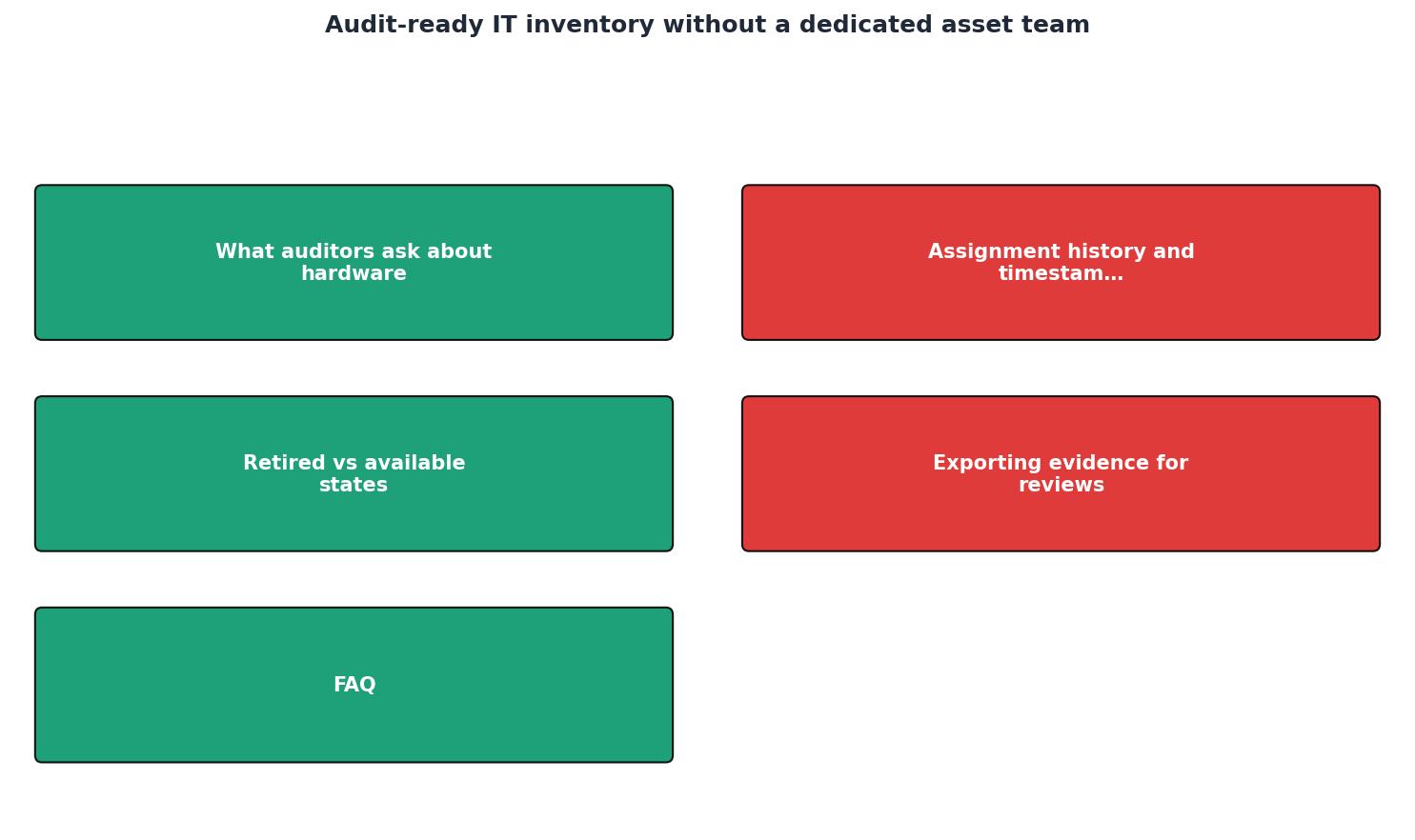
Achieving audit readiness involves several key steps:
- Centralize Inventory Management: Use a single platform to track and manage all assets. This reduces the complexity of managing multiple systems and ensures that all data is accurate and up-to-date.
- Automate Processes: Reduce manual errors by automating inventory updates and compliance checks. Automation can significantly decrease the workload on IT staff, allowing them to focus on more strategic initiatives.
- Regular Audits: Schedule frequent audits to ensure data accuracy and compliance. Regular audits can help catch discrepancies early, preventing them from becoming larger issues.
- Utilization Insights: Leverage data analytics to understand equipment utilization and optimize resources. By analyzing usage patterns, companies can make informed decisions about asset allocation and future purchases.
Key takeaway: Centralized management and automation are pivotal for audit readiness.
FAQ
Frequently Asked Questions
By leveraging SetupMatch, IT operations managers and asset coordinators can transform their inventory management processes, achieving higher efficiency, reduced waste, and a seamless path to audit readiness. Whether it's through policy-based kits or detailed compliance reporting, SetupMatch offers the tools needed to optimize IT asset management in any organization.
Additional Resources
- Vendor audit risks | Why ITAM readiness is non-negotiable - If you aren't audit-ready, the financial impact can be ...
- How SAM Tools Improve Software Audit Preparedness - Discover how Software Asset Management (SAM) tools help businesses stay compliant and audit-ready with minimal effort.
- A Guide to Assets Inventory management - An effective assets inventory management system automates a ton of the tedious, manual tasks that eat up your team's valuable time. Instead of .