
In many organizations, IT teams struggle to keep an accurate track of the equipment assigned to employees. This persistent issue often stems from reliance on outdated methods like spreadsheets, which are ill-equipped to handle the complexities of modern asset management. As companies grow, so does the need for a more robust solution. A dedicated inventory and allocation system not only streamlines processes but also optimizes equipment utilization, reducing unnecessary costs and improving operational efficiency.
Photo by Nataliya Vaitkevich from Pexels
TL;DR:- Spreadsheets fail as headcount grows due to their lack of scalability and automation.
- A dedicated system improves equipment visibility and policy-based allocations.
- The right tool reduces chaos, ensures clear ownership, and optimizes resource use.
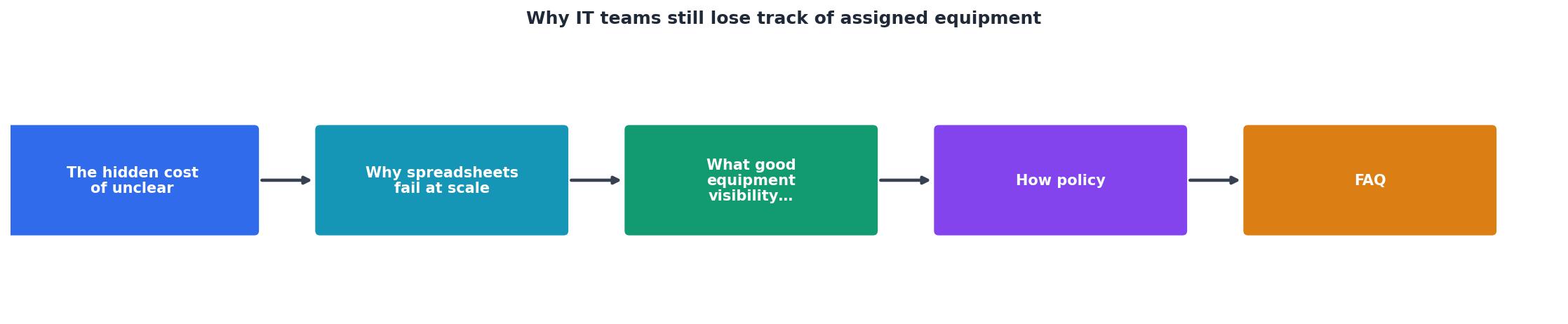
The Hidden Cost of Unclear Ownership

Unclear ownership of equipment can lead to a variety of hidden costs. When it's not evident who is responsible for a device, maintenance may be neglected, and software updates might be missed. This can result in performance issues or security vulnerabilities. Furthermore, when employees leave the company, retrieving and reallocating equipment becomes challenging, often resulting in lost assets.
Every piece of equipment in an organization represents a financial investment. When ownership is not clearly defined, maintenance schedules are often ignored. For instance, regular software updates and security patches may be omitted, leaving devices vulnerable to cyber threats. This oversight not only jeopardizes the security of sensitive data but can also lead to system downtimes, disrupting business operations.
Moreover, during employee offboarding, the absence of clear ownership records complicates the retrieval of equipment. Devices are frequently misplaced or forgotten entirely, leading to financial losses. An effective equipment management policy should include clear ownership attribution, ensuring that every device is assigned to a specific individual or department with accountability for its upkeep.
Why Spreadsheets Fail at Scale
Spreadsheets are often the go-to tool for small businesses managing IT assets. However, as organizations grow, the limitations of this approach become evident. Spreadsheets lack real-time updates, making it difficult to track changes accurately. They also don't provide automated alerts for maintenance schedules or warranty expirations, which can lead to overlooked tasks and increased downtime.
Spreadsheets were not designed to handle the dynamic nature of modern asset management. They require manual updates, which are not only time-consuming but also prone to human error. As the volume of inventory grows, keeping track of each asset becomes increasingly challenging. The lack of automation means that IT teams must spend excessive time reconciling data, reducing their ability to focus on strategic initiatives.
Additionally, spreadsheets offer limited collaboration capabilities. In large teams, multiple users updating a spreadsheet can lead to version control issues, where data discrepancies arise due to simultaneous edits. This can result in confusion and miscommunication, further complicating asset management.
"The problem stays hidden during quiet weeks because managers have time to check calendars and chase updates.">, Why Fleet Priorities Get Lost in Busy Weeks?
Signs Your Team Has an Equipment Tracking Problem
- Frequent instances of lost or unreturned equipment.
- Difficulty in determining the current status of devices.
- Over-purchasing due to lack of visibility into existing inventory.
- Excessive time spent updating and reconciling spreadsheets.
What Good Equipment Visibility Looks Like

Effective equipment visibility means having a clear, up-to-date view of all assets, their status, and their location. A dedicated inventory management system can provide this by offering features such as real-time tracking, automated alerts, and comprehensive reporting. This level of visibility allows IT teams to make informed decisions about purchases and allocations, ultimately saving time and money.
In an ideal scenario, IT teams can access a centralized dashboard that displays all assets, their current status, and historical usage data. This enables proactive management, where potential issues can be identified and addressed before they escalate. Real-time tracking ensures that any changes in asset status, such as a device being moved to a new location or assigned to a different employee, are immediately reflected.
Automated alerts for maintenance schedules and warranty expirations further enhance visibility. By receiving timely notifications, IT teams can ensure that devices are maintained regularly, extending their lifespan and optimizing performance. Comprehensive reporting tools also provide insights into asset utilization, helping organizations identify underused equipment that can be reallocated or retired.
How Policy-Based Kits Reduce Chaos

Policy-based kits are predefined sets of equipment tailored to specific roles within an organization. By standardizing these kits, IT teams can streamline the onboarding process and ensure that employees have the tools they need to perform their jobs effectively from day one. This approach not only reduces chaos but also improves employee satisfaction and productivity.
When employees join an organization, having a predefined kit of equipment ensures that they receive all the necessary tools to start their roles without delay. This reduces the time spent on procurement and setup, enabling new hires to become productive more quickly. Policy-based kits also facilitate rapid scaling, as IT teams can efficiently provision equipment for multiple new employees simultaneously.
Standardization of equipment across similar roles simplifies management and support. IT teams can develop standardized processes for maintenance and troubleshooting, reducing the complexity of managing diverse hardware and software configurations. Additionally, this approach promotes consistency in employee experience, as all team members have access to the same quality and type of equipment.
Key Takeaway
Equipment Audit Checklist
Regular audits are crucial for maintaining an accurate inventory. Use this checklist to guide your next equipment audit.
Equipment Audit Checklist
Your progress is saved automatically in your browser.
Conducting regular audits helps organizations maintain control over their assets, ensuring that records are accurate and up-to-date. This process also identifies discrepancies between physical and digital inventories, allowing for timely corrections.
FAQ
Frequently Asked Questions
Key takeaway: A dedicated inventory and allocation system gives IT teams one source of truth for assigned equipment and kit policies.
Additional Resources
- Why Fleet Priorities Get Lost in Busy Weeks? - Learn why fleet managers lose track of maintenance and compliance during hectic weeks and how fleet software keeps urgent tasks visible and ...
- Top IT Support Challenges in K-12 Schools (And How to ... - IT teams can easily get overwhelmed by the number of requests pouring in during an outage, whether regarding whiteboards, smart TVs, or tablets.
- Understanding Asset Monitoring: From Basics to Advanced ... - Learn how to implement effective asset monitoring solutions that transform maintenance strategies and enhance operational efficiency across .