Equipment return workflow for departing employees
Managing IT equipment returns efficiently when employees leave is crucial for minimizing waste and ensuring proper utilization of resources. An effective workflow can help maintain a streamlined process, reducing the time and cost associated with equipment redistribution. This article explores best practices for creating a robust equipment return workflow, leveraging tools like SetupMatch for optimal results.

Photo by Polina Tankilevitch from Pexels
Managing IT equipment returns efficiently when employees leave is crucial for minimizing waste and ensuring proper utilization of resources. An effective workflow can help maintain a streamlined process, reducing the time and cost associated with equipment redistribution. This article explores best practices for creating a robust equipment return workflow, leveraging tools like SetupMatch for optimal results.
TL;DR
- Implement a structured equipment return workflow to reduce waste.
- Use role-based policies to streamline kit reallocation.
- Leverage smart matching for efficient equipment reassignment.
- Enhance visibility with real-time inventory tracking.
- Optimize utilization with data-driven insights from SetupMatch.
Understanding the Importance of a Structured Workflow

A structured equipment return workflow ensures that valuable IT assets are not lost or underutilized. When an employee departs, it's vital to have a clear process for retrieving equipment such as laptops, monitors, and peripherals. This not only maintains inventory integrity but also prepares the equipment for future use, reducing unnecessary purchases.
Key takeaway: A well-defined return process boosts efficiency and resource optimization, ensuring that IT resources are used to their fullest potential while minimizing unnecessary expenses.
Steps to Implementing an Effective Workflow

Implementing an effective equipment return workflow involves several key steps that, when executed correctly, ensure a seamless transition and optimal resource management.
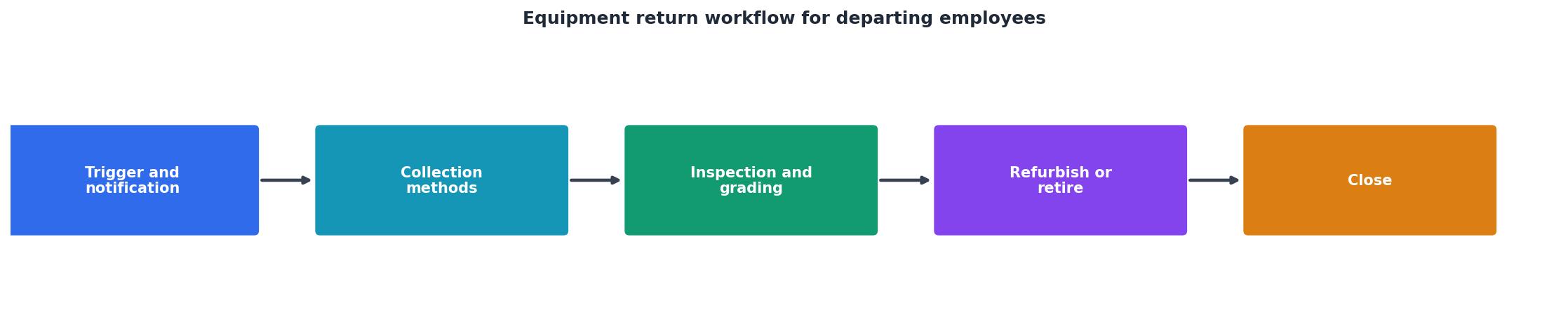
- Initiate the Return Process Early: Begin the return process as soon as an employee's departure is confirmed. Early initiation involves notifying IT and asset management teams to ensure they are prepared for equipment collection. This proactive approach prevents last-minute scrambles and potential oversights.
- Use Role-Based Policies: Establish equipment policies based on employee roles. This means defining which equipment is necessary for each role and ensuring that the correct gear is retrieved and reassigned. Role-based policies simplify the process of determining what needs to be returned and can reduce the turnaround time for reassigning equipment to new hires or other departments.
- Conduct Thorough Inspections: Upon the return of equipment, conduct detailed inspections for any damage or wear. Document the condition meticulously to decide if repairs or replacements are necessary before reassigning. This step ensures that only fully functional equipment is put back into circulation, maintaining the quality of resources.
- Leverage Smart Matching: Utilize advanced tools like SetupMatch to match returned equipment with upcoming needs. Smart matching ensures that equipment is reallocated quickly and accurately, minimizing downtime for new hires and other team members who require immediate access to technology.
- Update Inventory Systems: Keep your inventory management system updated in real-time. This involves recording the status of equipment as it moves through the return process. Real-time updates provide clear visibility into the availability, reservation, and assignment of equipment, facilitating better planning and resource allocation.
Practical Checklist for Equipment Returns
To ensure no step is overlooked during the equipment return process, utilize the following checklist. This list serves as a practical guide to maintain consistency and thoroughness.
Equipment Return Checklist
Your progress is saved automatically in your browser.
This checklist not only aids in maintaining a structured approach but also serves as a documented procedure that can be refined over time based on feedback and changing organizational needs.
The Role of Technology in Streamlining Returns

Incorporating technology into the equipment return process can drastically improve efficiency and accuracy. Platforms like SetupMatch offer sophisticated solutions that automate and streamline various aspects of the workflow.
SetupMatch, for instance, provides features such as smart global matching and role-based kit policies, which enhance the efficiency of IT teams by ensuring that equipment is optimally utilized. The platform's ability to integrate seamlessly with existing inventory management systems ensures that all equipment movements are tracked accurately and in real-time.
Automation, such as return notifications for departing employees, reduces the need for manual follow-ups, accelerating the process and freeing up valuable time for IT staff. This technological integration not only speeds up the workflow but also reduces the likelihood of human error, ensuring a more reliable and consistent process.
"The Washington State Library Tweney 89 Collection.">, Ballot Return Statistics
Key takeaway: Leveraging technology ensures a seamless and efficient equipment return process, making it easier to manage and optimize resource allocation.
FAQ
Frequently Asked Questions
Soft CTA: For IT teams looking to streamline their equipment return workflows, SetupMatch offers comprehensive solutions that enhance visibility, optimize utilization, and ensure efficient resource management. Explore more at SetupMatch.
Additional Resources
- Ballot Return Statistics | WA Secretary of State - Ballot return statistics for the November General will begin on October 20, 2026. Ballot return statistics are posted after 5 p.m. each business day, not ...
- Return your ballot - Minnesota Secretary Of State - Return the ballot to the office that sent the ballot, during office hours, or by 5 p.m. on Election Day. If you are using the Agent Delivery process, the ...
- Fifty-five per cent return to competitive sport following ... - Background: The aim of this study was to update our original systematic review of return to sport rates following anterior cruciate ligament (ACL) .
Assign the right equipment to every employee
SetupMatch helps IT teams track inventory, define kit policies, and match employees to the right hardware.
Get started